

Screw Air Compressor
Exceptional Service is Our Guarantee
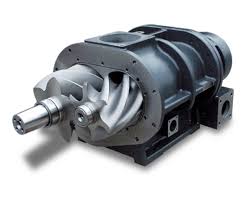
A screw air compressor (often referred to as a rotary screw compressor) is a type of positive displacement compressor that uses two interlocking helical screws, or rotors, to compress air. These compressors are commonly used in industrial and commercial settings due to their continuous air supply and efficiency. The two rotors work together to trap and compress air as it flows through the system, creating a steady flow of compressed air.
Screw compressors are typically used for applications that require a large volume of air and need to run continuously. They are available in both oil-lubricated and oil-free versions, with the oil-lubricated models being more common in industrial settings for their higher efficiency and longer lifespan.
How Screw Air Compressors Work
- Air Intake: Air enters the compressor through an intake valve.
- Compression: The air is drawn into a pair of helical rotors (one male and one female rotor) that rotate in opposite directions. As the rotors turn, they trap air between them and compress it.
- Discharge: As the air moves along the rotors, it gets squeezed into a smaller space, increasing its pressure. Once the compressed air reaches the discharge port, it is released into the system or storage tank.
- Lubrication (in oil-lubricated models): Oil is injected into the compression chamber to lubricate the rotors and help cool the air. In oil-free models, air compression occurs without oil, making the compressed air clean and suitable for applications that require oil-free air.
Types of Screw Compressors
Oil-Lubricated Screw Compressors: These models use oil to lubricate the rotors and keep them cool during operation. They are more common in industrial applications and are efficient for continuous operation.
- Advantages: Higher efficiency, better heat dissipation, and longer operational life.
- Disadvantages: The compressed air may contain traces of oil, making it unsuitable for some applications (like food or pharmaceutical industries).
Oil-Free Screw Compressors: These compressors are designed to operate without oil, making the compressed air clean and free of oil contamination. They are used in industries where the purity of the compressed air is critical.
- Advantages: Provides clean, oil-free air suitable for sensitive applications.
- Disadvantages: Typically less efficient and more expensive than oil-lubricated models.